
Anyone selling hardware into the EU is checking the same date right now: 18 February 2027. That is when Article 11 of the EU Battery Regulation (EU) 2023/1542 starts to apply, requiring products with built-in portable batteries to let end users pull the whole battery out and swap it. For phones, earbuds, smartwatches and small appliances, that means mechanical redesign.
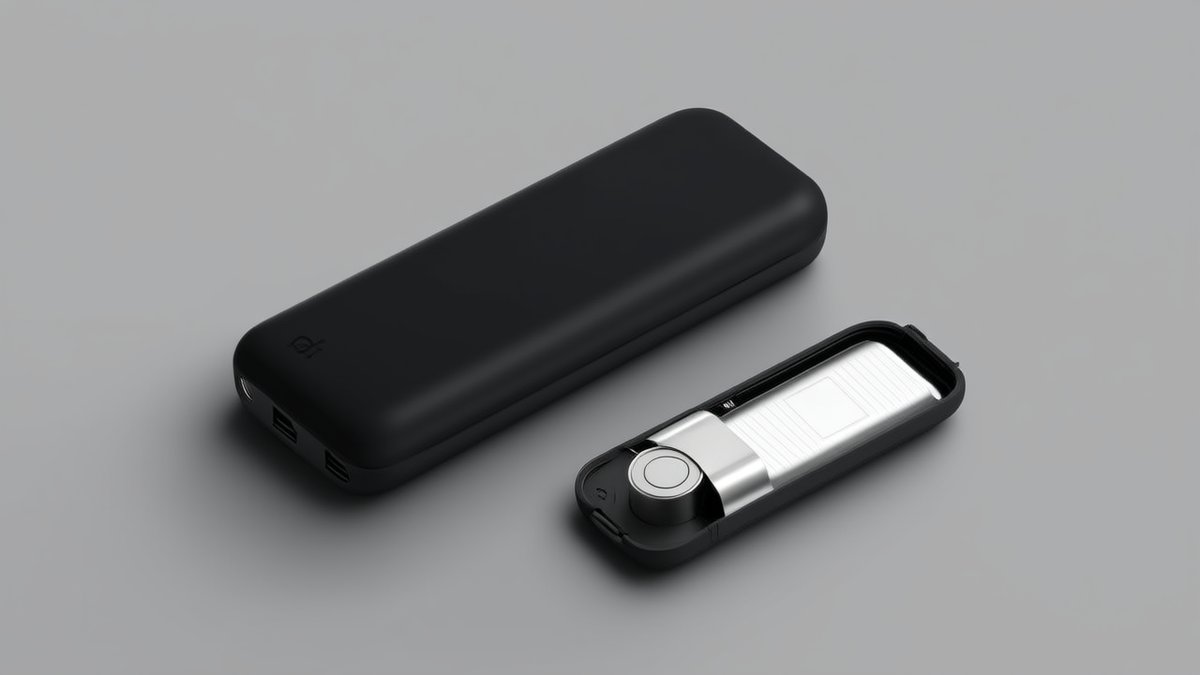
Power bank makers may be the ones who breathe out first. Under guidance adopted by the Commission on 14 July 2026, a product whose primary function is to power other products is itself a portable battery, and therefore falls outside Article 11. Standalone power banks, TWS earbud charging cases and jump starters for cars can keep their sealed, ultrasonically welded or glued enclosures. What still applies are the regulation's baseline duties: hazardous substance limits, labelling, the QR code, EPR take-back registration and end-of-life marking.
What the article actually demands: commercially available tools, not a screwdriver
The text requires portable batteries to be readily removable and replaceable by the end user at any time during the product's life, and it covers the whole battery rather than individual cells. The test falls on tools: it has to come out with commercially available tools, without proprietary tools, thermal energy or solvents. Two phrasings get repeated online but appear nowhere in the regulation. The idea of basic tools comes from EN 45554:2020, and the idea that nothing may be damaged is not the wording either — Article 11(6) says the replacement battery has to work without affecting the appliance's functioning, performance or safety.
The supporting duties bite as well. Instructions and safety information must ship with the product and stay permanently available on a public website. Spare parts must be available for at least five years after the last unit of the model is placed on the market, at a reasonable, non-discriminatory price. Software that impedes replacement, such as parts pairing between battery and board, is named as a problem. The Commission also flagged adhesives: if a bond only releases with heat or a solvent, it is out.
Who really has to change: the derogation list grows from 2 to 8
Article 11(2) started as a very short list letting a battery be designed for removal by independent professionals only. In the consolidated text of 31 July 2025 it held just two entries: washable or rinseable appliances, and professional medical imaging, radiotherapy and in-vitro diagnostics. On 14 July 2026 the Commission adopted Delegated Regulation C(2026) 5031 final, replacing that list with eight categories: washable or rinseable appliances including wearables; professional imaging, radiotherapy and IVD; wearable devices whose water resistance or durability would be compromised by user access, or which are too small to swap safely; electric toys with rechargeable batteries, until 31 July 2030; wireless thermometer probes for food contact; products under the ATEX Directive 2014/34/EU; on-body systems for subcutaneous drug delivery; and roof-mounted telematics for agricultural and construction machinery. Except for the medical category, each derogation applies only where it is needed to ensure user and appliance safety.
Watch the status of that act. It has no number assigned yet, a three-month objection period applies and can be extended by two, and it enters into force twenty days after publication in the Official Journal. Designing on the strength of a derogation that is not yet law is a bet on a timetable. The Commission guidelines C(2026) 5032 final, adopted the same day, are not legally binding, but they set the reading everyone will quote: the end user is a person of majority age with no specific experience or qualifications; IEC 60529 ingress ratings are indicative and not sufficient on their own; and where non-reusable fasteners are needed, they must also be available as spare parts.
For brands the sequence is straightforward. First decide whether the product is an appliance containing a battery or a battery in its own right — that alone decides whether the mechanics change. Then check whether you land in one of the eight new categories. Then put the QR code and battery passport on the calendar: from 18 February 2027 every battery needs a QR code, and LMT batteries, industrial batteries above 2 kWh and EV batteries need a battery passport. None of that is mechanical, and all of it has a deadline.
© SWPO. All rights reserved.