
Plush toys are an old category. AI turned them into something new. Intel Market Research puts the global market for conversational plush at about USD 620 million in 2025, an estimated USD 810 million in 2026, and a possible USD 4.36 billion by 2034, a 23.5% compound rate from 2026 to 2034. That base is small next to the wider AI companion market, which Research and Markets sizes at roughly USD 24.09 billion in 2026. A small pond makes it easier to see where the money actually flows, and into which form factor.
Four formats, one pool of money
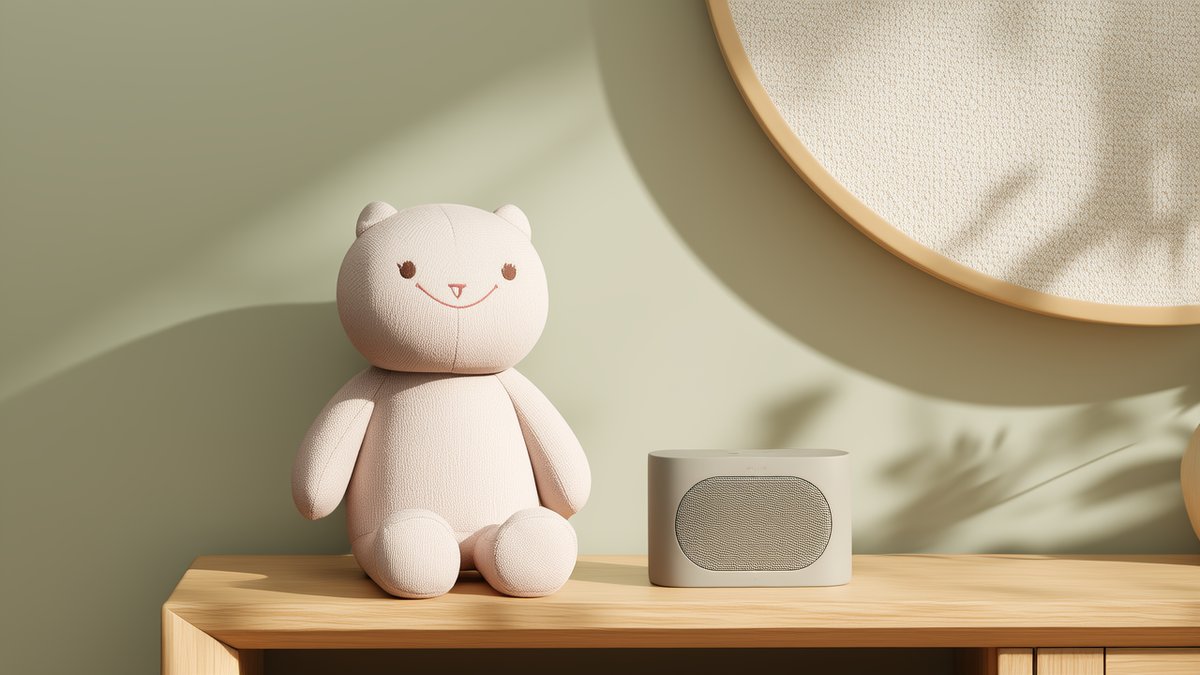
The research breaks the category into four types: the integrated AI plush companion, the detachable conversation module, licensed character plush, and therapeutic or routine-support plush. They sit on the same shelf, but they make money in completely different ways.
The integrated plush is the most obvious. The AI lives inside the toy, powered and connected enough to talk. Haivivi took that route in the United States this year with BubblePal and CocoMate. Its weakness is switching cost. A child bonds with one specific toy, so a hardware refresh wipes the emotional asset.
The detachable module flips that around. A small module goes into a plush the family already owns, and the bear that sat on the shelf comes alive. Parents do not have to abandon the old toy, and the manufacturer's material exposure shrinks from a whole plush to one module. The trade-off is fitting different sizes and openings, which is harder than building a complete toy, and also harder for a competitor to copy.
Licensed characters are the third route. The interaction is nothing new; the face is the value. Research on collectible and designer toys has long shown that IP carries heavy weight in purchase decisions, and at the moment of payment a parent is buying familiarity, not an algorithm.
The fourth type gets the least press: therapeutic and routine-support plush. COBY's screen-free AI companion lands here, and it does not sell conversation. It sells bedtime reminders, help settling down, and boundaries a parent sets. That is the most durable repeat-purchase case, because it answers something parents face every day.
Two unglamorous things decide the category
The first is children's data. The US Federal Trade Commission treats connected toys as online services under COPPA when they collect children's personal information, and voice recordings can qualify as personal information. In practice that means parental consent, content moderation, data minimisation, and a control panel a parent can actually understand, not one sentence buried three levels deep in a settings menu. The Toy Association has also flagged 2026 legislative proposals aimed at AI companion chat features in children's products. A talking plush is no longer a question of whether it gets regulated, but of which version of the rules applies.
One design axis is easy to overlook. When research houses segment this category, they split connectivity into cloud voice, parent-app connected, hybrid on-device and cloud, and limited or offline modes. When the Wi-Fi drops, does the thing in a child's hands become an ordinary plush or a piece of dead plastic? That question will show up again and again in review sections.
The second is channel and manufacturing. One key finding is that North America leads premium adoption while Asia-Pacific is the manufacturing and product-development hub. For teams building this line, product definition can stay local, but volume does not come from a single direct-to-consumer hit. The research is blunt about it: DTC e-commerce is fine for a launch, while mainstream scale still runs through trusted retail and a safety standard buyers can recognise. Model quality will level out. What stays on the shelf is usually the product with a clear parent dashboard, an offline mode that still plays, and a straight answer about voice data.
© SWPO. All rights reserved.