A wireless charger looks like the safe gift every holiday season: no size to guess, no taste involved, and a price range for any budget. It is also one of the easiest gifts to get wrong, because the same pad can run at full speed on the recipient's phone or at half of it.
Check the ceiling on the phone first
The speed ceiling sits on the phone, not on the charger. Apple publishes the tiers: iPhone 17, 17 Pro, 17 Pro Max, 16 Plus and 16 Pro Max peak at 25W; iPhone 16 and 16 Pro at 22.5W; iPhone Air at 20W; iPhone 17e and iPhone 15 or earlier at 15W (2026). A charger only reaches 25W if it supports the same tier.
The naming trap catches people every week. Apple never uses the label Qi2.2 and simply quotes peak watts, while the Wireless Power Consortium calls the fast tier Qi2 25W. Retail listings mix the two, so read the wattage and ignore the version number (2026). A 15W magnetic power bank on an iPhone 17 still runs at 15W, because the ceiling is on the phone.
Android needs more care. As of October 2026 only around 15 phones carry Qi2.2 certification with magnets built into the body, four of them Apple devices, leaving Motorola Edge 70 Max, the Google Pixel 10 series and HMD Skyline as the mainstream Android options (2026). If you are not sure the recipient uses a native magnetic Android phone, a magnetic power bank is not the safe pick: solutions that rely on a magnetic case or ring often fall back to 7.5W to 10W and grip poorly.
Five form factors, five kinds of recipient
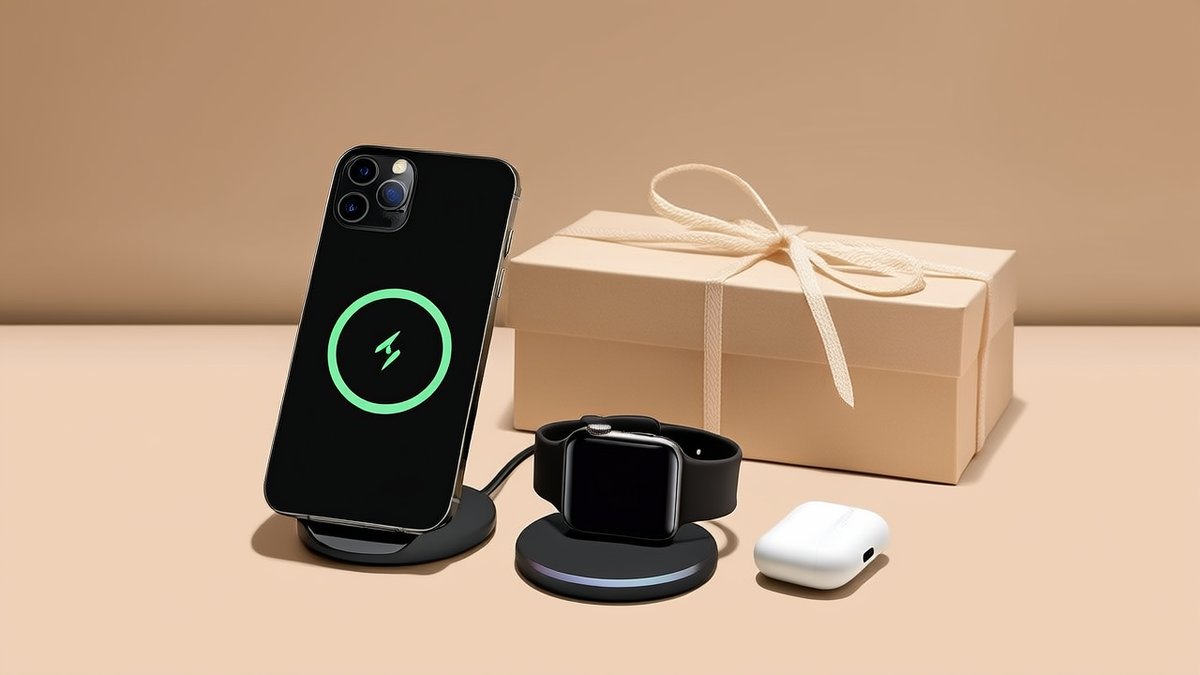
A 3-in-1 magnetic charging station suits a household with an iPhone and a watch, sits visibly on a nightstand or desk, and still reads as a gift. A magnetic power bank suits a daily commuter, and the slim 10,000mAh class - 0.58 inches thick in one widely sold model - is the everyday default, with enough capacity to refill a phone and still have charge left (2026). For more weight in the box, choose a 25W model with active cooling, where a fan and layered graphene hold the back below 36C at the cost of price and grams. A 65W to 100W multi-port GaN brick reads as a useful upgrade rather than a spare charger, which makes it a good fit for someone who works from a desk. A travel kit with interchangeable plugs is the most practical tier for anyone who flies often. Wholesale gifting rankings line up with the same order, putting 3-in-1 magnetic stations, 65 to 100W multi-port GaN chargers and travel kits at the top (WECENT, 2026).
Three things get missed most often. First, many 25W pads ship without a power adapter and need a 30W-plus USB-C PD brick to reach full speed - discovering that on the day the gift is opened is the fastest way to kill the moment. Second, cooling changes the experience: a typical magnetic power bank can reach 45C or higher on its back within 20 minutes, at which point the phone throttles itself, while actively cooled designs hold the surface below 36C against an international standard limit of 48C (2026). Third, warranty and channel matter; a 24-month warranty only helps when the box came from an authorised seller. And check the case: anything thicker than 3mm, with a metal backplate or a card pocket, hurts both grip and efficiency, and only N52H-grade magnets hold alignment through it (2026).
© SWPO. All rights reserved.