What actually happened in the 2025 power bank recall wave?
The scale was significant. According to a 2026 power bank buying guide, Romoss recalled roughly 490,000 units, Anker recalled over 710,000 domestically and more than 1.16 million in the US alone, and Baseus, Xiaomi, Ugreen, and Aukey were also hit. China's State Administration for Market Regulation suspended or revoked the mandatory 3C/CCC certification for several affected manufacturers. From June 28, 2025, the Civil Aviation Administration of China began confiscating any power bank on domestic flights that lacked a valid CCC mark or appeared on a recall list. Romoss went as far as suspending its power bank business entirely for six months to rebuild its manufacturing and certification.
After the recalls, is a magnetic wireless power bank still safe to buy?
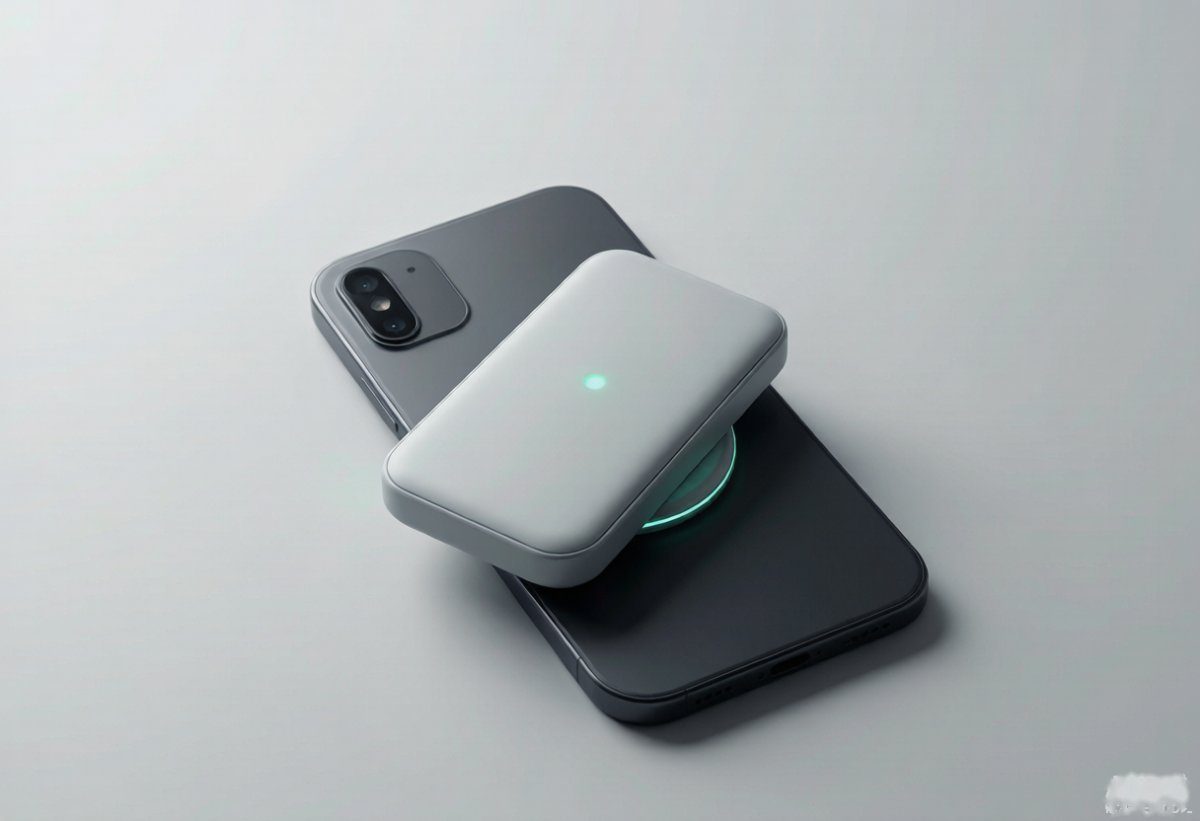
Yes — but you shop differently now. The root cause of these failures was mostly cell and production-line control, not 'wireless' as a method. In fact, magnetic wireless power banks used the moment to do two things: make thermal management standard, and raise the certification bar. In 2026, mainstream magnetic wireless chargers almost all ship with smart temperature control, overcharge protection, and foreign-object detection, and supply chains broadly re-audited and re-certified through the year. In other words, the industry was forced by this cleanup to lift its floor.
Why do so many people see Qi2.2 as the 2026 turning point?
Because it is the first standard to push magnetic wireless charging from 15W to 25W. Magnetic wireless used to be genuinely convenient but noticeably slower than plugging in; Qi2.2 largely closes that gap, delivering roughly 30% faster real-world charging than older MagSafe-style setups — thanks to precise magnetic alignment that cuts intermittent contact and heat loss. Samsung's Galaxy S26 Ultra and Google's Pixel 10 Pro XL are both built for 25W Qi2.2, and magnetic banks from Baseus, Momax, and Belkin have rolled out Qi2.2 support. For everyday users, the old rule that 'wireless is slower' stops holding this year.
Are the batteries themselves quietly getting safer too?
Yes, along two routes. Silicon-carbon (silicon-anode) cells pack more energy into less weight — in 2026 some 10,000mAh banks weigh as little as 140–150 grams, noticeably lighter than equivalent-capacity banks from a couple of years ago. Semi-solid-state batteries replace the free-flowing liquid electrolyte in a conventional cell with a gel-like polymer. Since thermal runaway — the chain reaction behind lithium battery fires — starts with that liquid electrolyte, semi-solid-state designs are inherently more resistant to it. Neither chemistry dominates yet, but both are increasingly marketed as a direct answer to the 2025 recalls and 2026 airline rules.
Is GaN (gallium nitride) worth it?
Depends on how you use it. USB-PD 3.1 lets a single port output 140W–240W — enough to fast-charge a 16-inch laptop at full speed — and GaN runs cooler and more efficiently than older silicon circuits at those high wattages while shrinking the size. But GaN's advantage really only shows above roughly 45W. If you mostly charge a phone and earbuds, silicon-based circuits are just as reliable and cheaper; reserve the GaN premium for banks you buy specifically to charge a laptop or tablet.
Where's the opportunity for makers and sellers?
Safety compliance has shifted from 'nice to have' to 'entry ticket.' By the end of April 2026, 148 Qi2.2 magnetic power banks had been certified across 79 brands, with 84 of those certified in the first four months of the year alone — already more than the entire second half of 2025 added. The global power bank market is projected to reach USD 22.3 billion by 2027. For brands and ODM/OEM partners, real differentiation is no longer on paper wattage but on sustained output stability, thermal management, thickness and weight, battery safety, and cross iPhone/Android compatibility. The center of gravity for design, customization, manufacturing, and sales is moving from 'who's fastest' to 'who's steadiest, most compliant, and can build scenario-based solutions.'
© SWPO. All rights reserved.