
Ask most people what they check before buying a wireless charger and you get one number: wattage. That question makes sense on an office desk. At home it leaves out the part that actually decides whether anything goes wrong. A living room table, a nightstand, the corner of a kid's homework desk: a coin, a key or a paper clip ends up there eventually. When metal lands inside the charging field, the field induces a current in it, and within seconds it is hot enough to burn.
On 31 August 2026 Hong Kong Customs told shoppers to stop using and retailers to stop selling a wireless power bank after safety testing. With a metal object placed between the charger and the device being charged, the object measured 86.6°C to 131.4°C, above the 85°C limit, and the charger itself overheated and failed the burn test. Officers seized 220 units and issued a prohibition notice to the retailer. That is not one brand's scandal so much as a reminder that the same design which behaves on an empty desk can misbehave in a house with children and pets.
Foreign object detection is a pass mark, not a bonus
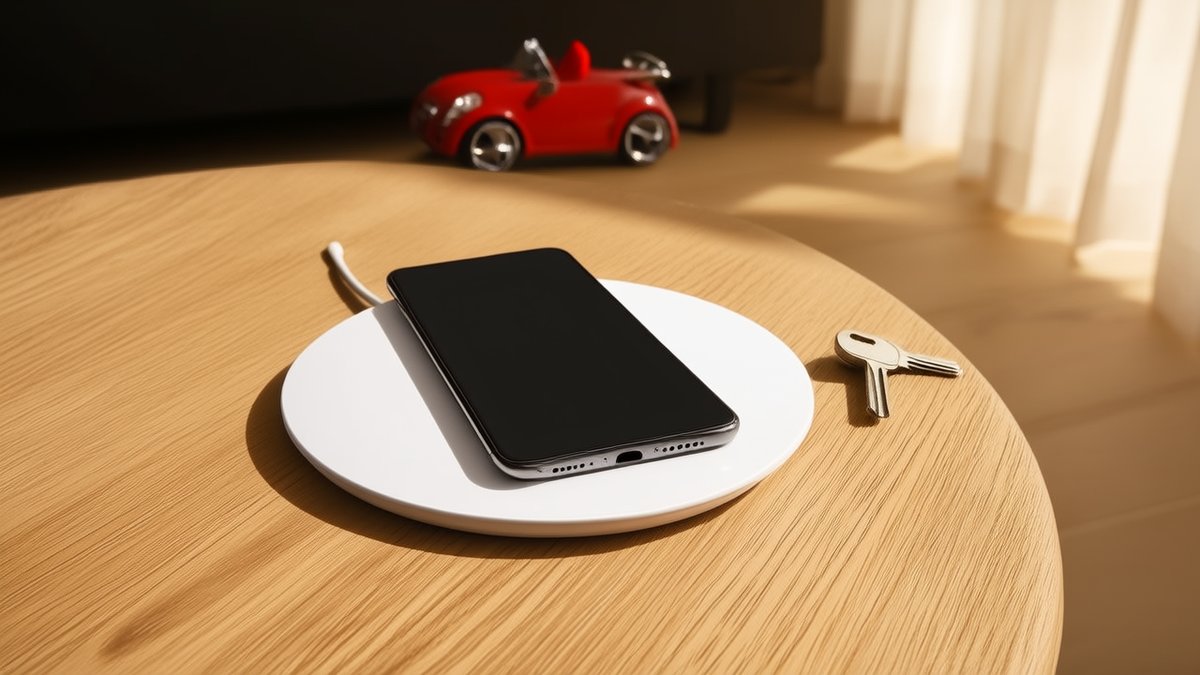
A wireless charger moves energy through a magnetic field, and that field does not know what metal is. Anything conductive sitting in the charging zone acts like a second receiver, turning field energy into heat. The industry calls the countermeasure foreign object detection, or FOD: the transmitter watches power loss and Q-factor shift for signs of something extra on the surface, then cuts power or backs off.
UL 2738 turns that into a test someone can repeat. Coins, keys, paper clips and aluminium foil are placed at the centre of the coil, at the coil edge, and between coils on multi-coil products, then their temperature rise is measured after a set heating period. A compliant charger either detects them and stops, or trims power so the object stays under the limit. Multi-coil chargers are tested zone by zone, and the hardest case is asymmetric loading — one coil at full power, its neighbour idle, a foreign object sitting right on the boundary where detection is weakest. When you shop, the checkable part is certification: Qi covers interoperability and protocol, UL 2738 covers electrical safety. They are not substitutes for each other.
Surface temperature and where you put it are what you live with daily
Qi2.2 caps the surface of a 25W magnetic charging pad at 40°C. That figure is a design target, not a promise about how it feels. Two habits matter more in practice. First, do not charge on a bed, a sofa or under a cushion — blocked airflow pushes temperature up, the charger derates or stops, and all you notice is that charging got slower. Second, keep cases with metal plates, card wallets and metal desk mats off the pad. They behave exactly like a coin.
Pet owners should also think about the magnets in the alignment ring. A phone or a card resting against strong magnets for a long time is not the concern; implanted devices such as hearing aids and pacemakers are. Manufacturers and health bodies generally suggest keeping a distance of 15cm or more. With children, heat and electricity matter more than magnets. Pick products with sealed housings, no exposed metal contacts, and a habit of throttling themselves. Store charging cables separately instead of in the same box as toys, and keep the charger somewhere you can see it while it works.
So the order to buy in: Qi certification and FOD first, surface temperature control and cooling second, wattage and looks last. In a home with kids and cats, flipping that order tends to get expensive.
© SWPO. All rights reserved.