Start with a detail that is easy to skip. The same iPhone lists a rated wireless charging power of 7.5W on Apple's China store page, with the AirPods case at 1W. Abroad, the same generation on a Qi2.2-certified magnetic pad is rated to pull 25W. The difference is not the hardware. It is the frequency.
The cause sits in the Interim Provisions on the Radio Management of Wireless Charging (Power Transmission) Equipment, in force since September 1, 2024. Issued by China's Ministry of Industry and Information Technology, it confines mobile and portable wireless charging devices to three bands — 100-148.5kHz, 6765-6795kHz and 13553-13567kHz — with rated transmission power capped at 80W. That is actually a loosening from the 50W ceiling in the 2021 draft. The trouble is at the other end: MagSafe and the Qi2 magnetic stack use a 360kHz centre frequency, and 325-405kHz is allocated to aeronautical radionavigation. MIIT put it plainly in a ministerial mailbox reply: that band cannot be used for wireless charging equipment, and from the effective date, non-compliant devices cannot be produced or imported for domestic sale and use.
In short, Qi2.2's 25W magnetic charging has no ticket into the Chinese market. Domestic Android makers took the other road, pushing power up inside the permitted bands — flagships list 50W, with 80W written as the ceiling.
So something awkward happens: one technology grows into two kinds of product depending on the market.
Why a single global standard collides on frequency
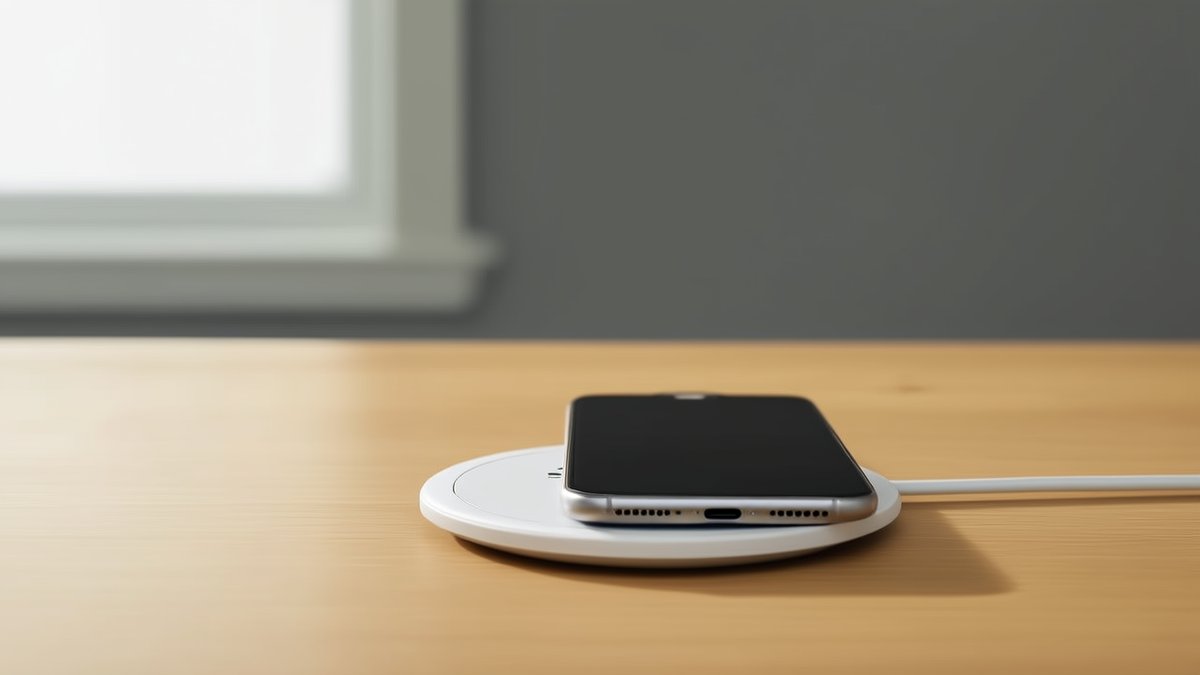
From an industry standpoint, this is uncomfortable. What the WPC has spent the last two years doing is exactly the opposite — writing magnetic alignment and a power ceiling into one specification everyone shares. Qi2.2, branded Qi2 25W, opened certification in July 2025, lifting the ceiling from 15W to 25W and mandating a surface below 40 degrees Celsius at 25W output; magnetic alignment pushes coupling efficiency to 85-92%, against roughly 70-75% for a manually placed legacy Qi pad. Certified products went from 69 in August 2025 to 637 by February 2026, and past 600 by July (counts vary slightly by tracker). Across the ecosystem, more than 13,000 Qi products are certified and over 300 companies are members. At the WPC's off-cycle meeting in Beijing in June 2026, more than twenty manufacturers sat down to fix the architecture of the next-generation Qi 50W standard, targeted for 2028.
But 360kHz was inherited from Apple's MagSafe and cannot simply be changed. Getting into China means switching bands and redoing the coil and resonance matching — building a separate product line from scratch. No software switch solves that.
What it means for buyers, and for brands
First, the thing in your hand. Buying inside China means buying into the 100-148.5kHz compliant branch, which does not talk to the 360kHz magnetic accessories sold abroad. On the same pad, a China-market iPhone sits at the 7.5W tier — not broken, just compliant. Run it the other way and a China-market phone will not hit 25W on an overseas magnetic pad either. So if you want the magnetic route, check that the phone and the accessory are on the same frequency footing before you pay.
Then the people building products. One SKU used to cover the world; now it takes two lines, one following Qi2.2 at 360kHz to 25W and one sized to the domestic bands. Certification splits as well, because the test items and the label criteria differ. For ODM and OEM factories, that split is an opportunity. Different bands mean the coil, capacitors, shielding and firmware all have to be retuned, and a supplier that can run both lines well has more pricing power than one competing purely on cost. Conversely, a rebadged unit with a new shell and an unchanged internal design will lose on both sides.
One more point that gets missed: the rules cover wireless charging equipment itself. A desktop pad without a cell, a 3-in-1 magnetic stand, a car magnetic mount — those sit under different rules from a lithium power bank. Keeping those two categories straight when you buy saves real trouble.
The short version: the standard keeps moving forward while the rulebooks move apart. The same technology will end up as two different products in two different markets. For buyers, the frequency question is the one to remember. For brands, put the dual-line plan into the 2027 schedule now.
© SWPO. All rights reserved.